

No products in the basket.
Choosing the correct glass thickness is one of the most important decisions when planning a glass balustrade. The right specification doesn’t just influence the appearance of the finished installation—it also plays a vital role in its strength, safety and compliance with UK Building Regulations.
Whether you’re installing a glass balustrade on a staircase, balcony, decking area or roof terrace, the thickness of the glass will depend on several factors, including the type of balustrade, where it’s being installed and the level of protection required.
Here’s everything you need to know.
Why Does Glass Thickness Matter?
Glass balustrades are designed to withstand significant loads while providing a safe barrier around raised areas and staircases.
The thickness of the glass affects:
- The strength of the balustrade
- How much the glass can flex under load
- The type of fixing system that can be used
- Compliance with UK Building Regulations
- The overall appearance of the installation
Thicker glass generally provides greater rigidity and is often required for frameless systems, where the glass itself provides the structural support. Framed systems benefit from additional support from posts and handrails, allowing thinner glass to be used in many applications.
Choosing the correct specification ensures your balustrade performs exactly as intended for years to come.
What Determines the Glass Thickness?
There’s no single glass thickness that’s suitable for every project.
Instead, the correct specification depends on factors such as:
- Whether the balustrade is framed or frameless
- Internal or external installation
- The height of the balustrade
- Whether it’s protecting against a fall
- The fixing method being used
- Wind loading for exposed outdoor locations
- Current UK Building Regulations
For this reason, the glass should always be selected alongside the balustrade system rather than as a standalone product.
12mm Toughened Glass
12mm toughened glass is one of the most commonly used options for residential balustrades.
Because it’s typically installed within a framed system, the surrounding posts and handrails provide much of the structural support.
It’s often used for:
- Internal staircases
- Landings
- Post and rail systems
- Garden decking
- Patio balustrades
For many homeowners, 12mm glass offers an excellent balance between strength, appearance and affordability.
15mm Toughened Glass
15mm toughened glass provides additional rigidity while maintaining the same clear, contemporary appearance.
It’s often chosen for:
- Larger glass panels
- Premium residential installations
- Commercial applications
- Projects requiring increased structural performance
The thicker glass creates a more substantial feel while still allowing uninterrupted natural light and clear views.
17.5mm Toughened Laminated Glass
17.5mm toughened laminated glass consists of two sheets of toughened glass bonded together with a durable interlayer.
Unlike standard toughened glass, the laminated construction helps keep the panel in place if one layer is damaged, providing an additional level of protection.
This makes it a popular choice for:
- Frameless glass balustrades
- Balconies
- Decking
- Raised terraces
- Installations protecting against a fall
Where frameless balustrades don’t include a handrail and are protecting a change in level, laminated glass is generally required under current guidance.
21.5mm Toughened Laminated Glass
21.5mm toughened laminated glass is the thickest standard option offered by Balustrade Superstore and is commonly specified for premium frameless installations.
Its additional thickness provides increased rigidity while maintaining the clean, minimalist appearance that frameless systems are known for.
It’s particularly suited to:
- Glass balconies
- Roof terraces
- Luxury homes
- Coastal properties
- Large outdoor installations
For homeowners looking to create uninterrupted views with minimal visible framework, 21.5mm laminated glass delivers both exceptional strength and a premium architectural finish.
Toughened vs Laminated Glass
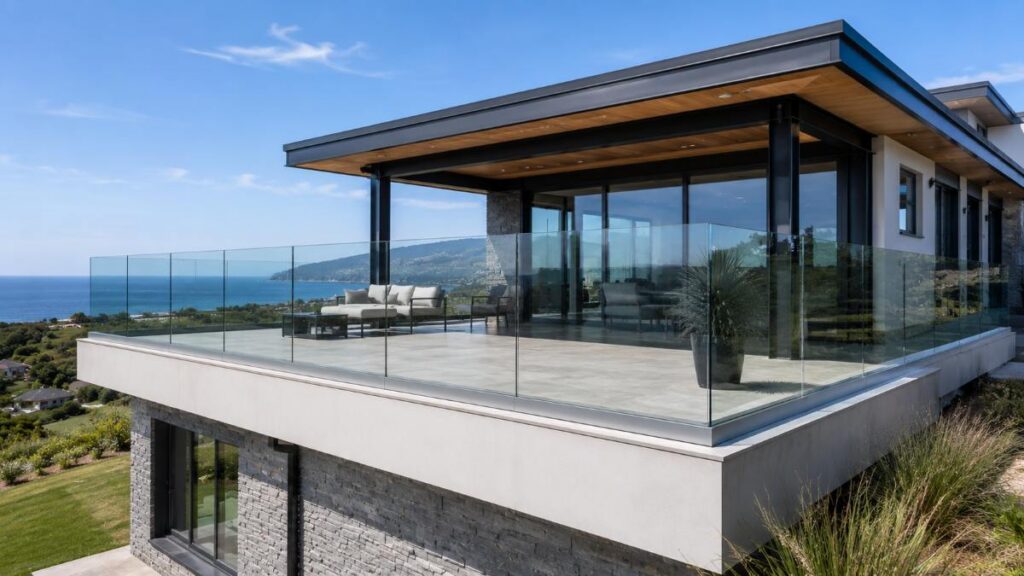
Glass thickness is only part of the equation. It’s also important to understand the difference between toughened and laminated glass.
Toughened Glass
Toughened glass is heat-treated to make it significantly stronger than standard float glass.
If broken, it shatters into thousands of small fragments, helping reduce the risk of serious injury.
It’s commonly used in framed balustrade systems where the surrounding framework continues to provide structural support.
Laminated Glass
Laminated glass is made by bonding two sheets of toughened glass together with a durable plastic interlayer.
If one pane breaks, the interlayer helps hold the glass together, preventing it from falling away and maintaining a protective barrier until the panel can be replaced.
This additional safety is why laminated glass is recommended—and often required—for many frameless balustrade installations.
Does Thicker Glass Always Mean Better?
Not necessarily.
Using glass that’s thicker than required can increase the cost of the project without providing any practical benefit.
The best option is always the glass that’s appropriate for the installation.
For example, a framed internal staircase may only require 12mm toughened glass, while a frameless balcony overlooking a garden could require 17.5mm or 21.5mm toughened laminated glass.
Selecting the correct specification ensures you achieve the right balance between safety, appearance and value.
Choosing the Right Glass for Your Balustrade
The type of balustrade you’re installing will usually determine the most suitable glass thickness.
Framed systems often use 12mm or 15mm toughened glass because the framework carries much of the structural load.
Frameless systems rely on the glass itself for support, meaning 17.5mm and 21.5mm toughened laminated glass are frequently the preferred choice. Although these thicker panels have a higher upfront cost, they create the sleek, contemporary appearance that has made frameless balustrades increasingly popular in modern homes.
Choosing the correct combination of glass and fixing system ensures the balustrade not only complies with current standards but also delivers the performance and aesthetics you’re looking for.
Final Thoughts
Choosing the right glass thickness isn’t simply about selecting the thickest panel available. Every balustrade is different, and the correct specification depends on the design of the system, where it’s being installed and the level of protection required.
Whether you’re fitting a framed glass balustrade for an internal staircase or a frameless glass balustrade system around a balcony or decking area, selecting the appropriate glass thickness will ensure your installation is safe, durable and built to last.
If you’re unsure which specification is right for your project, seeking expert advice before ordering will help ensure you choose the most suitable glass for your balustrade.
Posted in Uncategorized
