

No products in the basket.
If you are planning a glass balustrade, one of the first things you may ask is how thick the glass needs to be.
The short answer is that there is no one thickness that suits every job. The right thickness depends on where the balustrade will go, what type of system you are using, what type of glass is specified, and what UK safety requirements apply.
This guide explains balustrade glass thickness in simple terms, so it is easier to understand what matters for stairs, balconies, and decking areas.
Why glass thickness matters
Glass thickness is important because a balustrade is there to help protect people at edges, level changes, stairs, and raised areas.
If the glass is too thin for the job, it may not be suitable for the loads, fixing method, or location. If it is correctly specified, it can give the strength and safety the system needs.
That is why glass thickness should never be guessed or chosen on looks alone.
There is no single thickness for every balustrade
Many people want one simple number, but balustrade glass is not that simple.
The right thickness can change based on:
- Whether the glass is toughened, laminated, or both
- Whether the system is framed or frameless
- Whether it is for stairs, a landing, a balcony, or decking
- The height of the balustrade
- The width of the glass panels
- The fixing method
- The load the system needs to meet
So while thickness matters, it is only one part of the full design.
Common glass thicknesses used in balustrades
In UK balustrade systems, some common glass thicknesses include:
- 10mm
- 12mm
- 15mm
- 17.5mm
- 21.5mm
These are only examples, not universal rules.
A smaller indoor system with more framing may use a different thickness from a frameless outdoor balcony system. That is why it is important to look at the full specification instead of copying a number from another project.
Does glass type matter as much as thickness?
Yes, it does.
A thicker piece of ordinary glass is not the same as safety glass made for balustrades. In most cases, balustrade systems use toughened glass, laminated glass, or toughened laminated glass.
These options behave differently:
- Toughened glass is made to be much stronger than normal glass
- Laminated glass helps hold broken pieces together if the panel is damaged
- Toughened laminated glass combines both features
This means the right answer is not only about how thick the glass is. It is also about what kind of glass it is.
What about stairs?
Stair balustrades need careful planning because they protect people while they are moving up and down.
The right glass thickness for stairs depends on the system design, panel size, support, and whether the glass is framed or frameless. Some stair systems may use supported glass panels, while others rely more heavily on the glass itself.
Because of that, stair balustrades should always be specified for the exact layout rather than using a one-size-fits-all thickness.
What about balconies?
Balcony glass often needs a stronger specification than some indoor installations. That is because balconies protect an exposed edge and may need to deal with different loading requirements.
In many cases, balcony balustrades use laminated safety glass, often in thicker specifications than lighter indoor systems. Frameless balcony systems may need even more care because the glass plays a bigger structural role.
If you are choosing a balcony balustrade, thickness should always be checked together with glass type and fixing method.
What about decking?
Decking balustrades can vary a lot. Some are in sheltered garden spaces. Others are raised, exposed, and used often.
That means the right glass thickness for decking depends on:
- The height of the drop
- Whether the area is domestic or commercial
- Wind exposure
- The support system
- Whether the balustrade is framed or frameless
Outdoor decking systems also need hardware and materials suited to weather exposure, not just the right glass thickness.
Are frameless balustrades thicker?
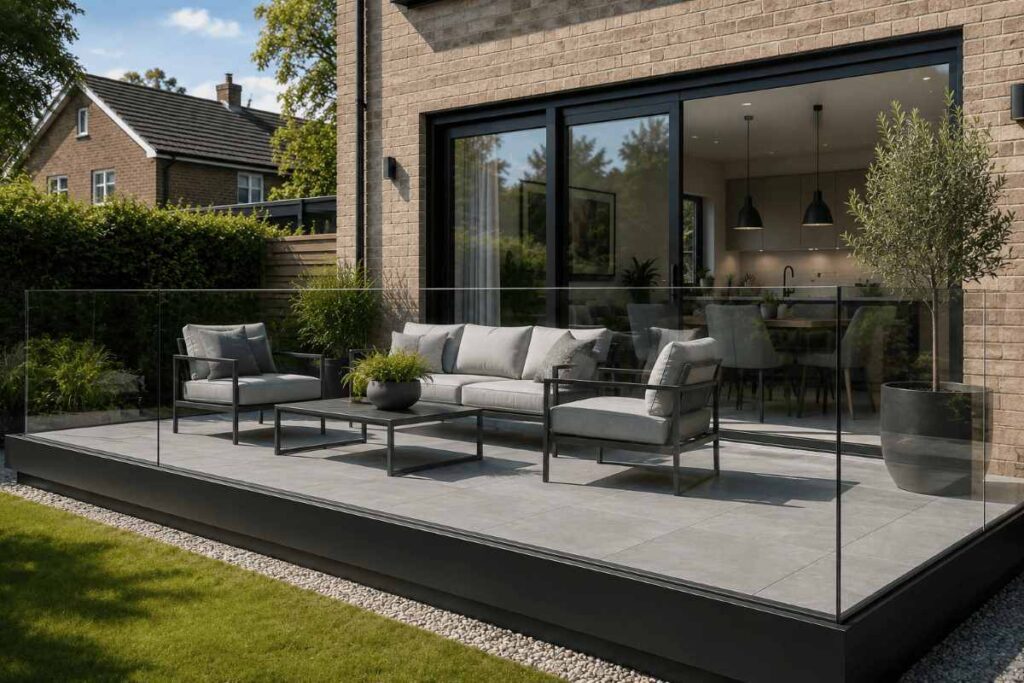
Often, yes.
A frameless glass balustrade usually needs the glass to do more of the visual and structural work. Because there is less surrounding support, the glass specification is often heavier than in a post-supported system.
That does not mean every frameless system uses the same thickness. It means frameless designs usually need more careful specification.
Do UK rules give one required thickness?
Not usually as one simple number for every project.
In the UK, balustrades should be designed to suit the location and meet the relevant building and safety requirements. Those requirements often focus on safe guarding height, loading, and suitable safety glazing rather than giving one thickness that covers every design.
So the correct thickness comes from the system design and the use case, not from a single general answer.
Why the full system matters
By this point, the main idea is clear: thickness matters, but the full balustrade system matters more.
A safe balustrade depends on:
- Glass thickness
n- Glass type - Panel size
- Fixing method
- Handrail or top rail design where relevant
- Installation quality
- Suitability for the location
Even good glass can become the wrong choice if the rest of the system is not designed properly.
What should buyers check before choosing?
Before buying a glass balustrade, it helps to ask a few basic questions:
- Is it for stairs, a landing, a balcony, or decking?
- Is the system framed or frameless?
- What type of safety glass is being used?
- What thickness is specified?
- Is the system for indoor or outdoor use?
- Is it designed to meet UK requirements for that location?
- Is installation guidance clear?
When comparing systems from Balustrade Superstore, it helps to look at the full product specification rather than focusing on thickness alone.
Common mistakes to avoid
A few mistakes come up often with balustrade glass:
- Thinking thicker always means safer
- Assuming all 10mm or 12mm glass is the same
- Ignoring the difference between toughened and laminated glass
- Using indoor logic for outdoor balconies or decking
- Choosing style before checking the system design
Avoiding these mistakes can save time and reduce safety risks.
Final thoughts
The right balustrade glass thickness depends on the full job. Stairs, balconies, and decking do not all need the same specification, and glass type matters as much as thickness.
If you want the safest and most suitable result, look at the whole system. Check the glass type, the support method, the intended use, and whether the design is suitable for UK requirements.
A well-specified balustrade is not just about one number on a glass panel. It is about making sure the whole system is right for the space.
FAQs
What thickness glass is used for balustrades?
Common balustrade glass thicknesses include 10mm, 12mm, 15mm, 17.5mm, and 21.5mm, but the right choice depends on the system and location.
Is 10mm glass thick enough for a balustrade?
Sometimes, but not always. It depends on the type of glass, the support system, the panel size, and where the balustrade is being used.
What thickness glass is used for balcony balustrades?
Balcony balustrades often need a stronger specification than some indoor systems. The correct thickness depends on the design, glass type, and loading requirements.
What thickness glass is used for stair balustrades?
There is no single answer for all stairs. The right thickness depends on the layout, support, glass type, and the full balustrade system.
Are frameless glass balustrades thicker than framed ones?
Often, yes. Frameless systems usually need the glass to do more of the work, so they often use heavier specifications.
Does thicker glass always mean a safer balustrade?
No. Thickness matters, but glass type, fixing method, and installation matter too. A thicker panel is not automatically the right panel for every job.
Posted in Uncategorized
