

No products in the basket.
If you are planning an exterior balcony balustrade, one of the most important questions is simple: what glass thickness should you use?
The short answer is that for SABCO balustrade systems, 17.5 mm or 21.5 mm glass may be recommended. But there is not one fixed answer for every project. The right thickness depends on the building regulations, the use of the building, the required loadings and deflection limits, and in some residential settings, the height of the glass as well.
That is why glass thickness should never be chosen on appearance alone. A balcony balustrade has to do a safety job first, and the glass needs to be suitable for that specific application.
Why Glass Thickness Matters on Exterior Balconies
On an exterior balcony, the glass is not just there to look good. It forms part of the guarding system that helps protect people from a fall.
Because of that, the thickness of the glass affects:
- The strength of the balustrade
- How the glass performs under load
- How much the glass can deflect
- Whether the system is suitable for the building type
- Whether the installation can meet the relevant standards
This matters even more outside, where the balustrade may be exposed to regular use, changing weather, and more demanding conditions than some internal applications.
What Glass Thickness Is Used for SABCO Balcony Balustrades?
For exterior balcony balustrades using SABCO systems, 17.5 mm or 21.5 mm glass may be used.
If the application is a balcony, those thicknesses are typically the relevant starting point for compliance. But that does not mean both are suitable in every case. The correct option depends on the specific project requirements.
The final specification needs to account for:
- The type of building
- Whether the building is residential or another use class
- The required line load and other loading criteria
- The permitted level of deflection
- The height of the glass panel
- The overall system design
So while 17.5 mm and 21.5 mm are the key thicknesses to know for SABCO balcony use, the right one has to be matched to the actual job.
What Regulation Applies?
In the UK, one of the key standards for balustrades is BS 6180.
This standard helps guide the design of barriers in and about buildings, including the loading and performance requirements that apply to balustrade systems.
It is important because compliance is not just about choosing a thick enough piece of glass. The full balustrade system needs to perform properly under the loads expected for that building and location.
Why Building Type Changes the Answer
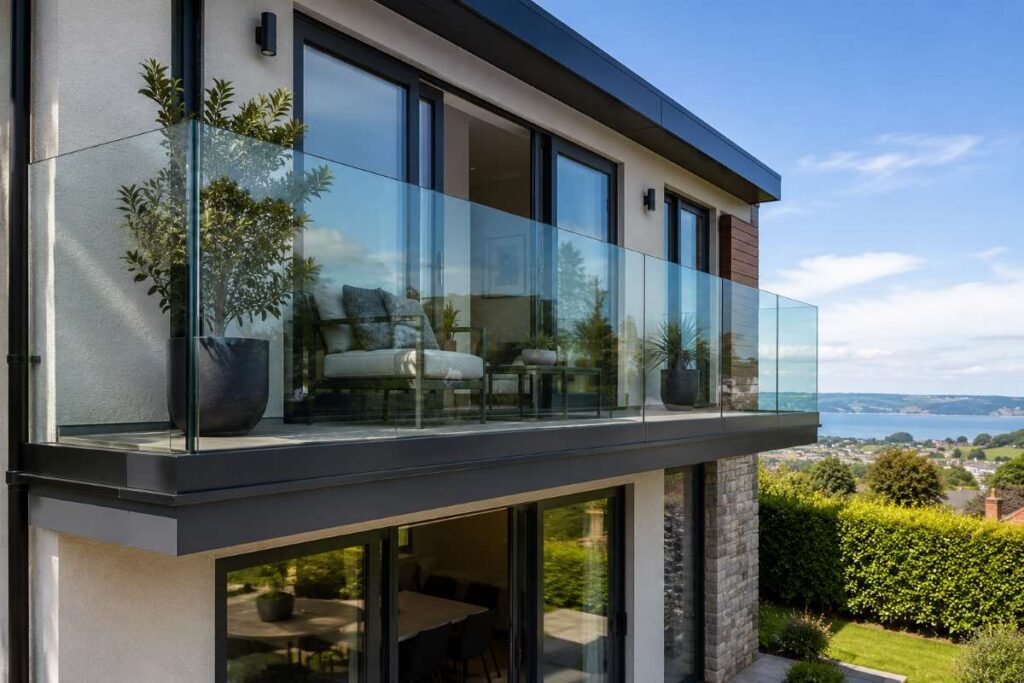
Once BS 6180 comes into the picture, the next thing to look at is how the building will be used.
Different buildings can have different loading requirements. A private residential balcony does not always face the same demands as a communal area, commercial setting, or other higher-use environment.
That means the recommended glass thickness can change depending on the usage category of the building. In some cases, 17.5 mm may be suitable. In others, 21.5 mm may be needed to meet the required performance.
This is why it is important to work from the actual project conditions rather than trying to apply one rule to every balcony.
Loadings and Deflection Both Matter
When people think about glass thickness, they often think only about strength. But deflection matters too.
A balcony balustrade should not only resist the required loads. It also needs to limit movement within acceptable levels. If the glass deflects too much, the system may not meet the performance standard even if the panel itself appears strong.
That is why loadings and deflection have to be considered together. The glass thickness, panel height, fixing method, and system design all affect how the balustrade performs.
Does Glass Height Affect the Thickness Needed?
Yes, especially in residential projects, the height of the glass can affect what thickness is required.
As glass height increases, the performance demands on the panel can change. A taller panel may need a different specification to achieve the required strength and deflection performance.
So if you are working on a residential balcony, it is important not to assume that one thickness will suit every glass height. The panel dimensions are part of the compliance picture.
Why You Should Not Guess the Specification
By this point, the pattern is clear. Choosing between 17.5 mm and 21.5 mm is not just a style decision or a simple price comparison.
The correct thickness depends on whether the full balcony system can meet the relevant requirements for:
- Building use
- Required loads
- Deflection limits
- Glass height
- System design
- Compliance with BS 6180 and other relevant project requirements
If the wrong glass specification is chosen early, it can lead to delays, redesigns, or a system that is not suitable for the intended application.
Final Thoughts
For exterior balcony balustrades, 17.5 mm or 21.5 mm glass may be recommended for SABCO systems, but the right choice depends on the building regulations, the use of the building, the required loading and deflection performance, and, in residential settings, the height of the glass.
That is why it is always best to check the full specification before making a decision. At Balustrade Superstore, we can help you understand which SABCO option is right for your balcony project and whether the system is suitable for the compliance requirements involved.
FAQs
Is 17.5 mm glass suitable for an exterior balcony balustrade?
It can be, depending on the building type, the required loads, the glass height, and the overall system specification.
When is 21.5 mm glass needed for a balcony balustrade?
21.5 mm glass may be needed when the project requires a higher-performing specification based on building use, loading, deflection, or panel height.
Does BS 6180 apply to glass balcony balustrades?
Yes. BS 6180 is one of the key UK standards used when assessing barriers and balustrades in and about buildings.
Does residential glass height affect the thickness required?
Yes. In residential projects, the height of the glass can affect which thickness is suitable for compliance and performance.
Can I choose balcony glass thickness based on appearance alone?
No. Glass thickness should be based on compliance, loading, deflection, and the needs of the specific building and balcony design.
Posted in Uncategorized
