

No products in the basket.
Natural light can completely change how a room feels. It can make a narrow staircase seem less enclosed, help an open-plan living area feel more connected and prevent landings or mezzanines from becoming unnecessarily dark.
But getting more daylight into a property is not only about adding bigger windows or skylights. The materials used inside the space affect how far that existing light can travel.
This is where glass balustrades have a clear advantage. Unlike solid timber, brick or opaque panels, transparent glass allows daylight and views to continue through the barrier instead of visually dividing the space.
Why balustrades can affect natural light
A balustrade needs to provide a safe barrier around areas such as staircases, landings, balconies and raised floors. However, the material used to create that barrier can influence how open the surrounding area feels.
A solid balustrade can interrupt sightlines and block some of the light travelling through a space.
Glass behaves differently.
Because the panels are transparent, daylight can continue through the balustrade rather than meeting an opaque surface. The difference can be particularly noticeable where natural light comes predominantly from one direction.
For example, a staircase beside a large window may receive plenty of daylight. A solid barrier can separate that light from the hallway or landing beyond it, whereas glass keeps the area visually open.
Glass helps existing daylight travel through the home
A glass balustrade does not create additional natural light. Instead, it makes better use of the daylight already entering the property.
This distinction is important.
Windows, glazed doors and skylights are still the actual sources of daylight. Glass balustrades simply create fewer visual and physical obstructions between those sources and the surrounding space.
This can work particularly well in:
- Open stairwells
- Hallways and landings
- Split-level living spaces
- Mezzanines
- Balconies beside glazed doors
- Rooms with large windows
In multi-level properties, for example, glass around an open staircase can allow light from upper floors to remain visible from lower areas rather than enclosing each level behind solid barriers.
Staircases can feel noticeably brighter
Staircases are one of the most obvious places to use glass when natural light matters.
Hallways and stairwells are often positioned towards the centre of a property, where direct access to external windows may be limited. A bulky balustrade can make these areas feel even more enclosed.
Replacing opaque infill with glass allows light from nearby windows, doors and adjoining rooms to remain visible across the staircase.
This can be especially effective in renovation projects.
If you are opening up an older interior, you may not need to completely redesign the staircase to create a lighter appearance. Changing the balustrade can remove a significant visual barrier while retaining the staircase itself.
Glass can make smaller spaces feel more open
Improving natural light is not purely about increasing brightness. Sightlines matter too.
Solid barriers clearly divide one part of a room from another. Transparent glass maintains the visual connection between those spaces, allowing you to see beyond the edge of the staircase, landing or mezzanine.
As a result, the room can feel larger and less interrupted.
That can be useful in smaller homes where every visual obstruction has an impact. It can also work well in open-plan properties where introducing a heavy balustrade would undermine the sense of space the layout was designed to create.
Glass still provides a physical barrier, but it has much less visual weight.
Frameless systems reduce visual obstruction further
If maximising light and maintaining clear sightlines are priorities, the amount of supporting structure around the glass also matters.
Post-and-rail glass balustrades still allow plenty of light through, but their posts and handrails remain visible.
Frameless glass balustrades remove the need for vertical posts, instead supporting large glass panels from a base channel. This produces a much less interrupted view and allows the glass itself to become the main visible part of the barrier.
That can make frameless systems particularly effective around contemporary staircases, balconies, roof terraces, patios and mezzanine floors where openness is part of the design.
Balconies can benefit too
The same principle applies outside.
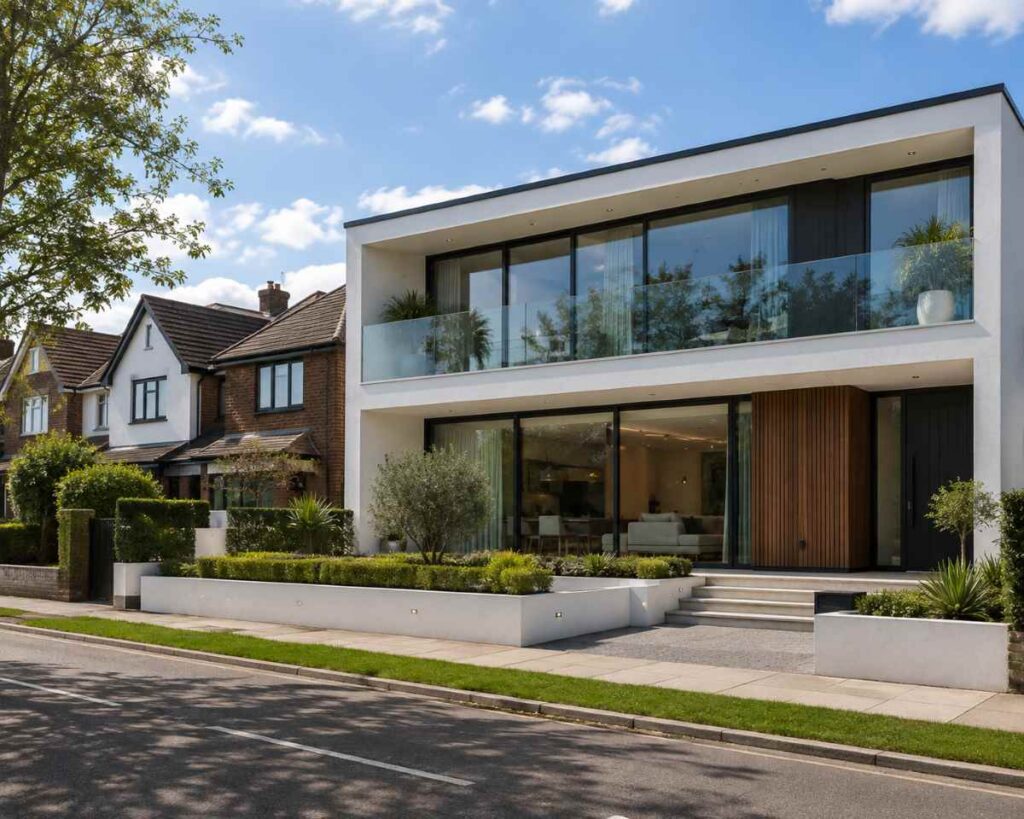
Imagine a first-floor balcony positioned outside a bedroom or living room with large glazed doors.
An opaque balcony wall or bulky barrier can interrupt both the view and some of the daylight reaching the area immediately behind it. Glass maintains a much clearer visual connection between the interior and exterior.
This can make the room feel more closely connected to the garden, landscape or surrounding view.
It is one reason glass works particularly well with modern architecture that already uses large windows and glazed doors. Rather than introducing a contrasting solid barrier outside them, the balustrade continues the open appearance.
Glass works well with skylights and large windows
The benefits become even more noticeable when glass balustrades are considered as part of the wider design rather than as a standalone feature.
For example, a property may have:
- Floor-to-ceiling windows
- Bi-fold or sliding doors
- Rooflights
- A glazed entrance
- An open stairwell
Using solid internal barriers can work against those features by dividing the spaces they illuminate.
Glass allows those existing sources of daylight to have a greater visual impact.
A rooflight above a staircase, for instance, can illuminate more than the stairwell itself when the surrounding balustrade remains transparent.
Clear glass also preserves views
Natural light and views are closely connected in how we experience a room.
Being able to see through a balustrade towards a window or outside space helps prevent the room from feeling boxed in.
This is particularly valuable where the property has a view worth preserving, such as:
- A landscaped garden
- Open countryside
- A coastal outlook
- A city skyline
- An architectural feature elsewhere in the property
A conventional barrier can cut across that view. Glass provides the required edge protection while keeping much more of the visual connection intact. Balustrade Superstore specifically highlights uninterrupted views as one of the main advantages of frameless systems.
What about privacy?
Maximising transparency is not always the only priority.
Some locations may need more privacy, particularly balconies or terraces overlooked by neighbouring properties.
In those situations, you need to balance openness against screening. A completely clear balustrade may maximise views and light but provide little visual privacy.
The right solution therefore depends on the position of the balustrade and what you need it to achieve.
For an internal staircase, transparency may be the obvious priority. For an exposed terrace overlooking a neighbour, privacy could carry more weight.
Keeping glass clean matters
Clear glass works best when it is actually clear.
Fingerprints, dust, rain marks and other deposits can make glass look duller over time. Internal staircase panels may need occasional cleaning where hands regularly touch them, while external balustrades can collect dirt from rain and surrounding conditions.
Fortunately, glass balustrades are relatively straightforward to maintain. Balustrade Superstore recommends soapy water or a suitable cleaning solution to keep its frameless glass looking clear.
Regular cleaning helps maintain the bright, open appearance that made glass attractive in the first place.
Natural light should not come at the expense of safety
A balustrade is still a safety barrier first.
The desire for a completely transparent design should never override the structural and safety requirements of the installation.
The appropriate system and glass specification depend on factors including where the balustrade is installed, whether it protects a fall and how the glass is supported.
For example, Balustrade Superstore offers frameless systems for different applications including balconies, patios, decking and landings, with glass options including toughened and toughened laminated safety glass.
Choose the system around both the design goal and the practical requirements of the project.
Final thoughts
Glass balustrades improve natural light mainly by removing an obstruction rather than creating more light.
Transparent panels allow daylight from windows, glazed doors and skylights to remain visible across staircases, landings and different levels of a property. At the same time, uninterrupted sightlines can make smaller or enclosed areas feel considerably more spacious.
Frameless systems take that effect further by reducing visible posts and supporting structures.
If you are designing a light, open interior or want to preserve the connection between an outdoor space and the rooms behind it, a glass balustrade can provide the required barrier without visually closing the area off.
FAQs
Do glass balustrades make a room brighter?
They can help a room feel brighter by allowing existing daylight to pass through the balustrade rather than being blocked by an opaque barrier.
Do glass balustrades create more natural light?
No. They do not create additional daylight. Instead, they allow light from existing windows, doors and skylights to travel through the space with fewer obstructions.
Are glass balustrades good for dark staircases?
They can be particularly useful on staircases because they allow light from nearby windows, upper floors and adjoining rooms to remain visible through the stairwell.
Are frameless balustrades better for natural light?
Frameless balustrades minimise visible posts and bulky supporting structures, creating clearer sightlines and allowing the glass to dominate the barrier visually.
Can glass balustrades be used outside?
Yes. Glass balustrades can be used for outdoor applications including balconies, patios, decking and roof terraces when an appropriate system and glass specification are selected.
Are glass balustrades difficult to keep clear?
Glass will collect fingerprints and dirt, but routine cleaning with soapy water or a suitable glass-cleaning product can help maintain its clear appearance.
Posted in Uncategorized
