

No products in the basket.
A glass balustrade is only as strong as the components that hold it in place. While the glass panels often receive the most attention, the fixings are just as important for ensuring the system is safe, secure and built to last.
Whether you’re installing a staircase, balcony, decking or terrace balustrade, understanding the different fixing components will help you choose the right system for your project.
In this guide, we’ll explain the most common glass balustrade fixings, how they work and what to consider when selecting them.
Why Are Balustrade Fixings Important?
Balustrade fixings are responsible for securely supporting the glass panels while transferring loads safely into the building structure.
Quality fixings help ensure the balustrade:
- Meets safety requirements
- Remains stable over time
- Withstands everyday use
- Resists weather exposure
- Maintains its appearance for years
Choosing the correct components is just as important as selecting the right glass.
Glass Clamps
Glass clamps are one of the most commonly used fixing methods.
These small metal brackets secure individual glass panels to posts or supporting structures without the need for holes through the glass itself.
Glass clamps are available in a range of finishes, including:
- Brushed stainless steel
- Polished stainless steel
- Black powder-coated finishes
They’re widely used on framed glass balustrades because they provide both strength and a clean appearance.
Base Channels
Base channels create one of the most popular fixing methods for frameless glass balustrades.
Instead of supporting the glass with visible posts, the panels sit securely inside a continuous aluminium channel fixed to the floor or edge of the structure.
This creates a sleek, uninterrupted appearance while providing excellent structural support.
Base channels are commonly used on:
- Balconies
- Roof terraces
- Decking
- Commercial buildings
Because most of the fixing system is concealed, the focus remains on the glass itself.
Glass Spigots
Glass spigots are freestanding clamps that hold glass panels at their base.
Usually manufactured from stainless steel, they’re positioned at intervals beneath each panel, leaving the majority of the glass unobstructed.
Spigots are popular because they:
- Create a minimalist appearance
- Allow water to drain freely
- Require fewer visible fixings
- Work well on external installations
They’re commonly used around swimming pools, patios and raised decking.
Posts and Handrails
Many framed balustrades use vertical posts combined with a top handrail.
The posts provide structural support while the handrail improves stability and offers a comfortable surface to hold.
Materials commonly include:
- Stainless steel
- Powder-coated aluminium
- Timber (for some internal installations)
Depending on the design, the handrail may sit directly on top of the glass or be mounted independently.
Rubber Gaskets and Packings
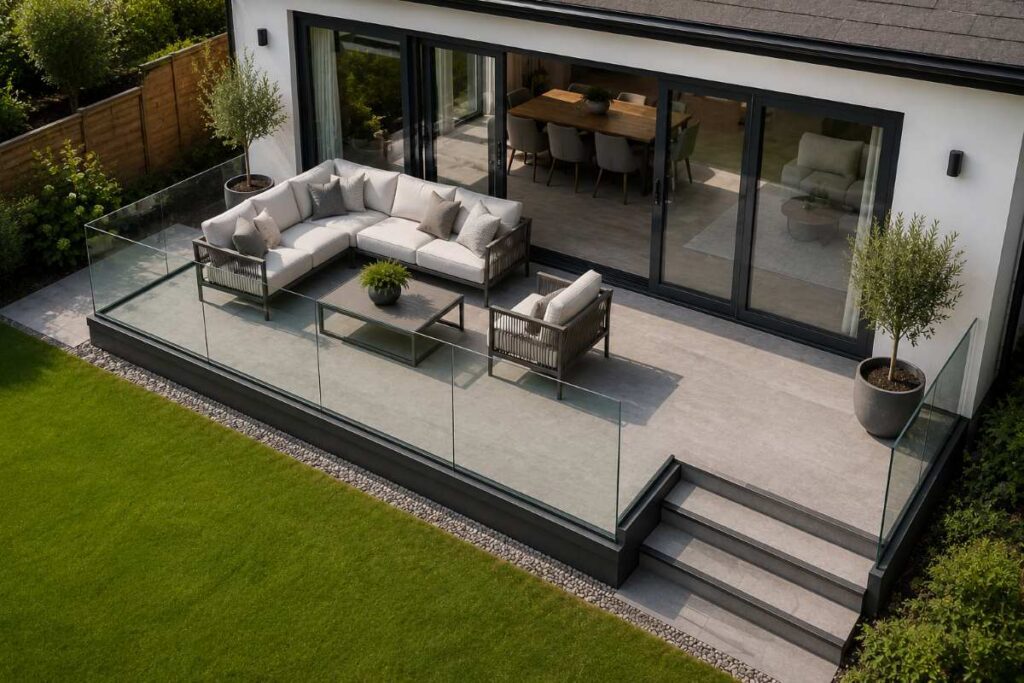
Although less noticeable, rubber gaskets and setting blocks play an important role.
These components:
- Protect the glass from direct contact with metal
- Help absorb movement
- Reduce vibration
- Improve the fit within channels and clamps
Using the correct gasket size helps distribute pressure evenly across the glass panel.
Fixing Bolts and Anchors
The strongest glass balustrade in the world is only as secure as the fixings attaching it to the building.
Depending on the installation, this may include:
- Expansion anchors
- Chemical anchors
- Through bolts
- Concrete fixings
- Timber fixings
The correct fixing method depends on the structural material beneath the balustrade and should always follow the manufacturer’s recommendations.
Choosing the Right Components
The most suitable fixing system depends on several factors.
These include:
- Internal or external installation
- Frameless or framed design
- Glass thickness
- Structural support available
- Desired appearance
- Budget
Selecting compatible components helps ensure the balustrade performs safely while achieving the desired finish.
If you’re still selecting the correct balustrade glass, it’s worth considering how the glass specification and fixing system work together, as different panel thicknesses and installation methods often require different hardware.
Which Fixing System Is Best?
There isn’t a single fixing method that’s right for every project.
Base Channels
Ideal for homeowners seeking a clean, contemporary appearance with minimal visible hardware.
Glass Spigots
Perfect for projects where preserving views is a priority while retaining a modern aesthetic.
Glass Clamps and Posts
A practical and versatile choice that offers excellent structural support while often being more cost-effective than fully frameless systems.
The right solution depends on your property’s design and the overall look you want to achieve.
Choosing a Quality Balustrade System
High-quality fixings contribute significantly to the lifespan, safety and appearance of a glass balustrade.
If you’re looking for bespoke frameless glass balustrades, Balustrade Superstore offers premium systems manufactured with durable glass and precision-engineered fixing components. Their bespoke solutions are designed to deliver both exceptional performance and a sleek, contemporary finish for residential and commercial projects.
Final Thoughts
Although glass panels are the most visible part of a balustrade, the fixing components are what keep the system secure and performing safely for years to come.
From discreet glass clamps and elegant spigots to concealed base channels and structural anchors, every component plays an important role. By choosing high-quality fixings that are compatible with your glass specification and installation, you’ll create a balustrade that combines safety, durability and modern design for the long term.
Posted in Uncategorized
