

No products in the basket.
Living by the coast offers stunning views, fresh sea air and an unrivalled connection to nature. Whether your home overlooks the beach, a harbour or dramatic cliffs, it’s natural to want unobstructed views that make the most of your surroundings.
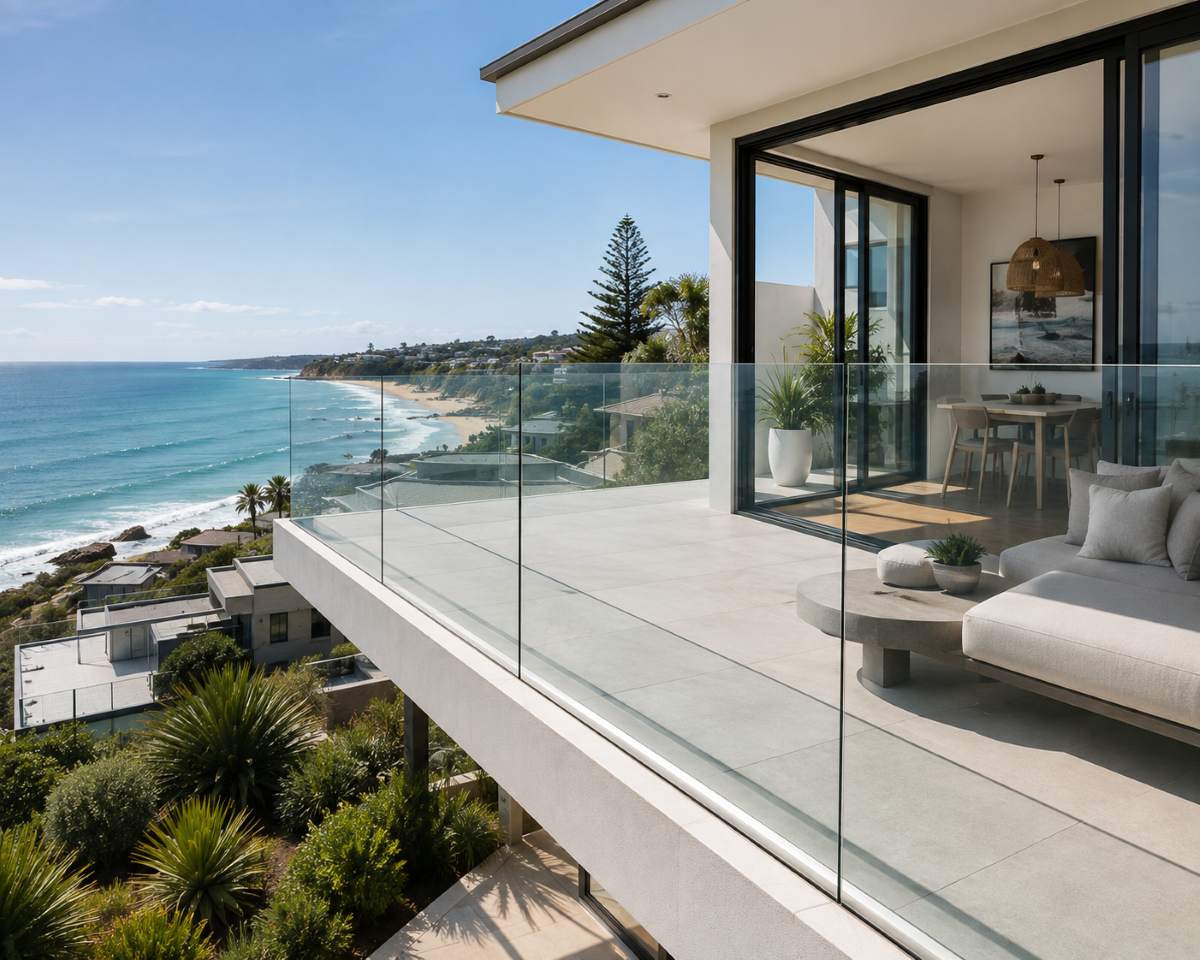
Frameless glass railings have become a popular choice for coastal properties because they provide safety without blocking the landscape. Their clean, minimalist appearance suits both contemporary and traditional homes while allowing uninterrupted sightlines across the sea.
However, coastal environments present unique challenges. Salt-laden air, high winds and constant exposure to the elements mean it’s essential to choose the right materials and installation system.
Here’s what you need to know before installing frameless glass railings on a coastal home.
Why Frameless Glass Is Ideal for Coastal Properties
One of the biggest advantages of frameless glass railings is their ability to maximise views.
Unlike timber or metal balustrades, glass creates a virtually invisible barrier that lets you enjoy panoramic sea views from inside your home, on a balcony or across a raised terrace.
Frameless systems also:
- Allow more natural light into your property
- Create a contemporary appearance
- Make outdoor spaces feel larger
- Complement a wide range of architectural styles
- Increase the feeling of openness
For coastal homes where the scenery is one of the property’s greatest assets, frameless glass helps ensure nothing stands between you and the view.
Coastal Conditions Are More Demanding
While glass itself is highly durable, coastal installations place greater demands on the complete balustrade system.
Sea air contains airborne salt particles that settle on exterior surfaces. Over time, these deposits can contribute to corrosion if fittings aren’t designed for marine environments.
Coastal properties may also experience:
- Stronger winds
- Higher humidity
- Driving rain
- Greater UV exposure
- More frequent temperature changes
For this reason, every component—not just the glass—needs to be selected with durability in mind.
Choosing the Right Glass
Safety glass is essential for all balustrade installations, but coastal environments often require careful consideration of the glass specification.
Many frameless systems use toughened laminated glass, combining the strength of toughened glass with the added security of a laminated interlayer. If one pane is damaged, the interlayer helps hold the panel together until it can be replaced.
The appropriate glass thickness depends on several factors, including:
- Installation height
- Panel size
- Wind loading
- Fixing method
- Building regulations
If you’re unsure which specification is appropriate, this guide to choosing durable glass for coastal environments explains the key factors involved in selecting the correct glass for long-term performance:
Don’t Overlook the Hardware
The glass panels often receive the most attention, but the fixings are equally important.
In coastal locations, standard metal fittings may deteriorate more quickly due to salt exposure.
High-quality frameless systems typically use marine-grade stainless steel or similarly corrosion-resistant materials designed to perform in harsh outdoor conditions.
These components include:
- Base channels
- Anchor bolts
- Glass clamps where applicable
- Handrail fixings
- Drainage systems
Choosing premium hardware can significantly extend the lifespan of the installation while reducing maintenance requirements.
Wind Loading Matters
One of the biggest engineering considerations for coastal glass railings is wind.
Open coastlines and elevated properties are often exposed to stronger winds than inland locations, placing greater pressure on glass panels and supporting structures.
Professional installers assess factors such as:
- Property location
- Height above ground
- Panel dimensions
- Local wind exposure
- Structural support
These calculations help determine the appropriate glass specification and fixing system needed to meet current UK Building Regulations.
Maintenance in Coastal Areas
Glass railings are generally low maintenance, but coastal installations benefit from more frequent cleaning.
Salt deposits can accumulate on both the glass and metal fittings. Although these deposits won’t normally damage the glass itself, allowing them to build up may affect the appearance of the system and contribute to corrosion on lower-quality hardware.
Simple maintenance includes:
- Rinsing away salt residue
- Cleaning the glass with a non-abrasive cleaner
- Wiping down stainless steel fittings
- Checking fixings during routine maintenance
Regular cleaning helps preserve both appearance and long-term performance.
Design Considerations
Frameless glass complements many different styles of coastal property.
For contemporary homes, it creates a minimalist aesthetic that allows the surrounding scenery to take centre stage.
On more traditional homes, the transparency of glass prevents the balustrade from competing with the building’s existing architectural features.
Many homeowners choose modern frameless glass barriers because they blend seamlessly with:
- Balconies
- Raised decking
- Garden terraces
- Roof terraces
- External staircases
The result is a clean, elegant finish that enhances outdoor living spaces without interrupting views.
Safety and Compliance
Every glass balustrade installation should comply with current UK Building Regulations.
Requirements vary depending on where the system is installed, but may include specifications relating to:
- Barrier height
- Structural loading
- Glass type
- Glass thickness
- Fixing methods
Using products specifically designed for structural balustrades helps ensure the finished installation performs safely in challenging coastal environments.
Working with experienced suppliers also provides confidence that the complete system—not just the glass—has been designed for long-term reliability.
Are Frameless Glass Railings Worth It for Coastal Homes?
For many homeowners, the answer is yes.
Although the initial investment may be higher than traditional timber or metal railings, frameless glass offers several long-term advantages:
- Outstanding views
- Timeless appearance
- Excellent durability
- Increased natural light
- Low routine maintenance
- Strong resistance to weathering when properly specified
Because they don’t visually obstruct the landscape, frameless systems can also increase the perceived value and appeal of coastal properties.
Final Thoughts
Frameless glass railings are an excellent choice for coastal homes, combining modern aesthetics with practical performance. Their transparent design allows you to enjoy uninterrupted sea views while providing the safety required for balconies, terraces and elevated outdoor spaces.
The key to a successful installation lies in choosing the right combination of toughened safety glass, corrosion-resistant hardware and a system designed to withstand the unique demands of coastal environments.
With the correct specification and routine maintenance, frameless glass railings can provide decades of reliable performance while enhancing both the appearance and functionality of your coastal home.
Posted in Uncategorized
