

No products in the basket.
Glass balustrades are a popular choice in UK homes and commercial spaces. They look clean, modern, and let more light through than many other railing options.
But one question comes up again and again: are glass balustrades safe?
The short answer is yes, when they are made from the right type of glass, installed properly, and used in line with UK rules. Like any building product, safety depends on good materials, correct design, and proper fitting.
This guide explains how glass balustrades stay safe, what glass types are used, and what UK regulations matter most.
Why glass balustrades can be safe
Many people worry that glass sounds fragile. That would be a problem if normal household glass were used, but that is not how balustrade systems are made.
Glass balustrades are usually made with toughened glass or laminated safety glass. These are designed to be much stronger than standard glass.
When the right glass is used, a balustrade can help protect edges, stairs, balconies, terraces, and raised areas in a safe and reliable way.
What makes a glass balustrade safe?
A safe glass balustrade depends on more than one thing.
The main safety factors are:
- The type of glass used
- The thickness of the glass
- The height of the balustrade
- The fixing system and handrail design
- Where the balustrade is installed
- Whether it has been fitted correctly
A strong panel alone is not enough. The full system needs to work together.
Toughened glass explained
Toughened glass is heat-treated to make it stronger than normal glass. It is widely used in balustrade systems because it can handle more impact and pressure.
If toughened glass does break, it usually shatters into many small pieces rather than large sharp shards. That lowers the risk of serious injury compared with ordinary glass.
This is one reason toughened glass is often used where safety matters.
Laminated glass explained
Laminated glass is made from two or more layers of glass with an interlayer bonded between them.
If the glass breaks, the broken pieces tend to stay attached to that inner layer. That helps the panel hold together instead of falling apart straight away.
This can be very important in balustrades, especially where there is a drop on the other side. In many cases, laminated toughened glass is chosen because it gives both strength and better post-breakage safety.
Toughened vs laminated glass
Now that the main glass types are clear, the difference is easier to understand.
- Toughened glass is strong and made to break more safely than normal glass
- Laminated glass helps hold broken pieces in place if a panel is damaged
- Toughened laminated glass combines both benefits
Which one is right depends on the design, the position, and the level of protection needed.
Are frameless glass balustrades safe?
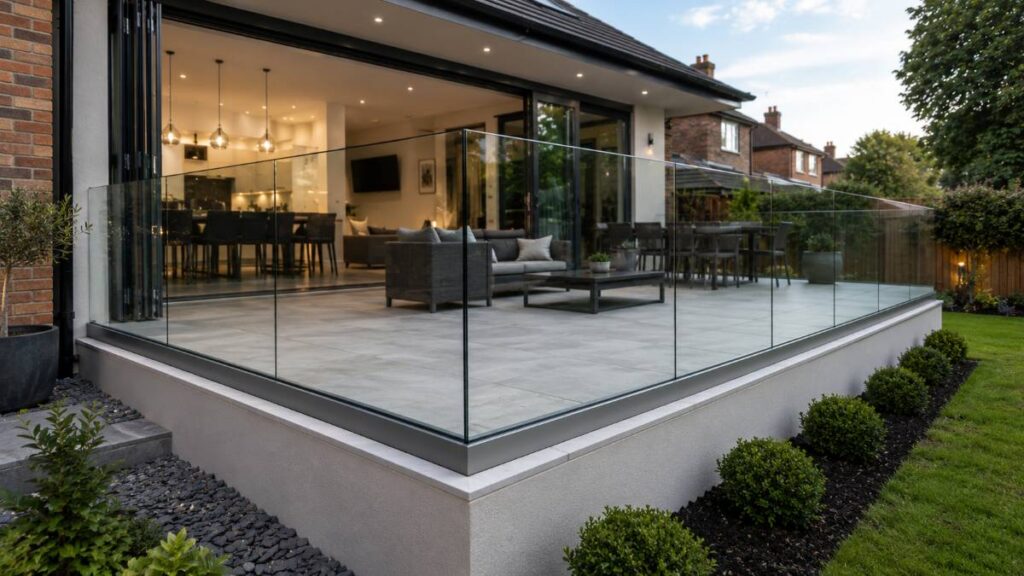
Frameless glass balustrades can be safe when they are designed and installed correctly. They are made to give a cleaner look, but they still need the right glass specification and fixing method.
Because there is less visible structure, the glass itself becomes even more important. Thickness, edge finish, base channel quality, and installation all matter.
A frameless look should never mean cutting corners on safety.
What UK regulations matter?
In the UK, glass balustrades should be designed and installed in line with the relevant building rules and safety standards.
The exact requirements can depend on where the balustrade is used, such as:
- Inside a home
- On stairs or landings
- On a balcony or terrace
- In a commercial building
Important points often include minimum guarding height, loading requirements, and the need to use suitable safety glazing in critical areas.
Because rules can vary by project, it is important to check the correct specification before buying or installing a system.
Why building regulations matter
Building regulations are there to reduce risk. They help make sure a balustrade is high enough, strong enough, and suitable for the space where it will be used.
For example, a balustrade on an outdoor balcony may need to deal with different forces than one used inside a home. Staircases also have their own safety needs.
That is why product choice should never be based on looks alone.
Does installation affect safety?
Yes, a lot.
Even high-quality glass can become unsafe if it is installed badly. Poor fixings, wrong measurements, weak support, or incorrect glass choice can all create problems.
That is why accurate design and proper installation are just as important as the glass itself.
What should buyers check before choosing a system?
Once you know safety depends on the whole system, it becomes easier to ask the right questions.
Before buying, check:
- What type of glass is being used
- Whether the glass is toughened, laminated, or both
- The glass thickness
- Whether the system is suitable for indoor or outdoor use
- Whether it is suitable for stairs, landings, or balconies
- Whether it is designed to meet UK requirements
- Whether installation guidance is clear
When comparing systems from Balustrade Superstore, it helps to look closely at the product details, fixing method, and intended use rather than judging on appearance alone.
Common safety mistakes to avoid
A few mistakes come up often when people choose balustrades.
These include:
- Assuming all glass is the same
- Choosing style before checking regulations
- Ignoring the importance of laminated safety glass
- Using a system not designed for the location
- Treating installation as a minor detail
Avoiding these mistakes can make the whole project safer from the start.
Final thoughts
Glass balustrades can be very safe when they are made from the right materials and installed properly. Toughened glass, laminated glass, and full system design all play a part.
If you are choosing a glass balustrade in the UK, focus on safety first. Check the glass type, check the intended use, and make sure the system is suitable for the space and relevant regulations.
A well-specified glass balustrade should not only look good. It should also give lasting protection and peace of mind.
FAQs
Are glass balustrades safe for homes?
Yes, they can be very safe when the right safety glass is used and the system is installed properly.
What type of glass is used in balustrades?
Glass balustrades usually use toughened glass, laminated glass, or toughened laminated glass.
Is toughened glass enough for a balustrade?
Sometimes, but not always. In some situations, laminated glass is also important because it helps hold the panel together if it breaks.
Are frameless glass balustrades safe?
Yes, if they are designed correctly, use the right glass, and are installed properly.
Do glass balustrades need to meet UK regulations?
Yes. Glass balustrades should be suitable for the location and follow the relevant UK building and safety requirements.
Does installation matter as much as the glass?
Yes. Even good glass can become unsafe if the balustrade is fitted badly or the wrong system is used.
Posted in Uncategorized
