

No products in the basket.
Glass balustrades have become a popular feature in modern homes, offering a sleek appearance while providing essential safety. They’re used in everything from staircases and mezzanines to balconies and raised decking, creating open spaces without compromising security.
Although indoor and outdoor glass balustrades may look similar, they’re designed to perform in different environments. Factors such as weather exposure, glass specification, fixings and maintenance all influence which system is suitable for your project.
Understanding these differences will help you choose a balustrade that not only looks great but also performs reliably for years to come.
The Main Difference: Environment
The biggest distinction between indoor and outdoor glass balustrades is where they’re installed.
Indoor systems are protected from rain, wind, UV exposure and fluctuating temperatures. Because of this, they don’t need the same level of weather resistance as external installations.
Outdoor balustrades, on the other hand, are constantly exposed to the elements. They must withstand everything from heavy rainfall and frost to strong winds and prolonged sunlight without compromising safety or appearance.
Although both types use safety glass, the overall system is designed with its environment in mind.
Glass Specifications
Both indoor and outdoor balustrades typically use toughened safety glass, but the specification often differs depending on the installation.
Indoor applications commonly use toughened glass because it offers excellent strength and, if broken, shatters into small blunt fragments rather than dangerous shards.
Outdoor systems frequently use laminated toughened glass, particularly where building regulations require it or where there’s a greater risk of impact. Laminated glass consists of two panes bonded together with an interlayer, helping the panel remain in place if damaged.
The correct glass thickness also varies depending on factors such as panel height, span and fixing method.
If you’re unsure which option is suitable, this guide to choosing glass for indoor and outdoor use explains the key considerations when selecting the right glass for your project
Fixings and Hardware
The hardware used for glass balustrades differs significantly between indoor and outdoor installations.
Indoor Systems
Internal balustrades are generally installed using:
- Glass clamps
- Base channels
- Stainless steel posts
- Handrails where required
Because they’re protected from harsh weather, there’s less risk of corrosion, although high-quality stainless steel is still recommended for longevity.
Outdoor Systems
External installations require hardware specifically designed for long-term weather exposure.
These systems typically feature:
- Marine-grade stainless steel fittings
- Corrosion-resistant fixings
- Drainage considerations within base channels
- Weather-resistant seals and gaskets
Using the correct components helps prevent rust, staining and premature wear over time.
Building Regulations
Whether installed indoors or outdoors, glass balustrades must comply with UK Building Regulations.
Requirements may differ depending on where the balustrade is located, including:
- Minimum barrier heights
- Glass specification
- Structural loading
- Safety around changes in floor level
For example, an internal staircase has different design requirements from a first-floor balcony overlooking a garden.
Working with a reputable supplier helps ensure your chosen system is suitable for its intended use and complies with current standards.
Design Considerations
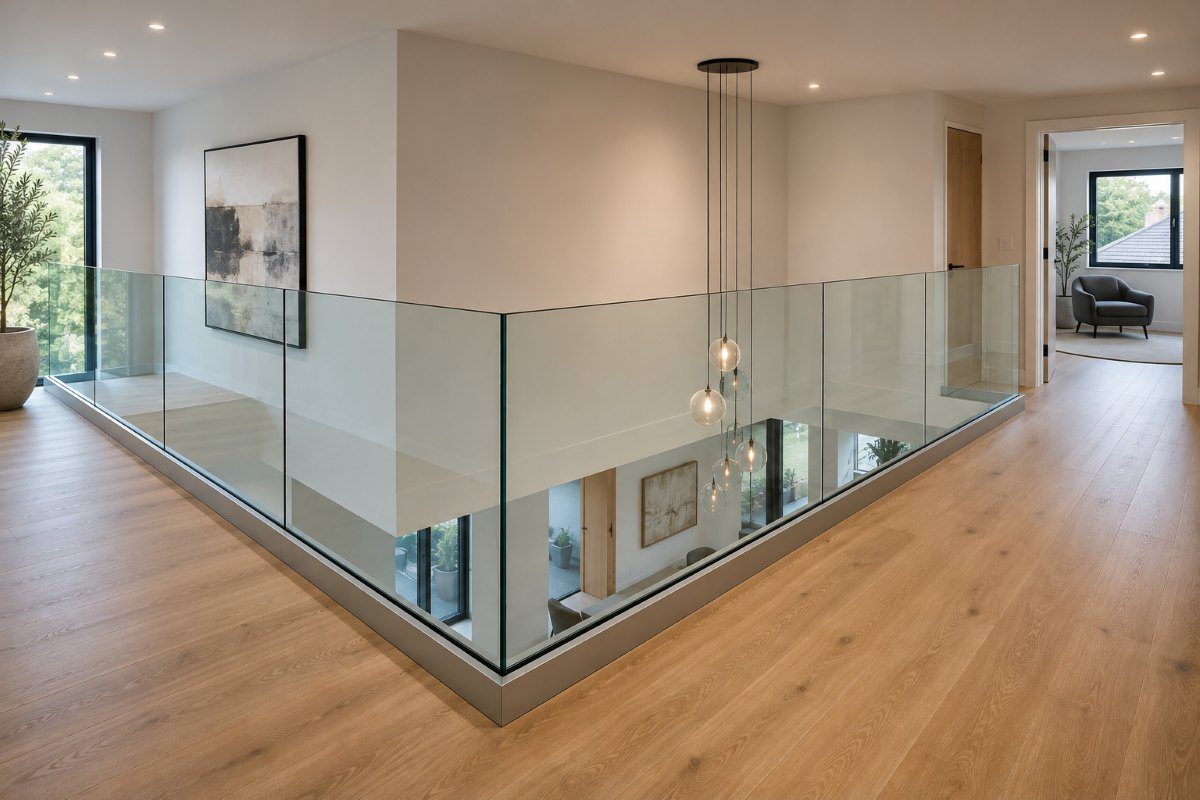
While the structural requirements vary, both indoor and outdoor glass balustrades offer impressive design flexibility.
Indoor Design
Internal installations often focus on creating brighter, more open living spaces.
Popular locations include:
- Staircases
- Landings
- Mezzanine floors
- Gallery walkways
Frameless systems are particularly popular because they maximise natural light and create a minimalist appearance.
Outdoor Design
External installations prioritise preserving views while providing protection.
Common applications include:
- Balconies
- Raised patios
- Decking
- Garden terraces
- Roof terraces
Many homeowners choose modern glass balcony systems to create uninterrupted views while enhancing the overall appearance of their property’s exterior.
Maintenance Requirements
One advantage of glass balustrades is their relatively low maintenance.
Indoor Glass
Internal panels generally require occasional cleaning to remove fingerprints, dust and everyday marks.
A microfibre cloth and standard glass cleaner are usually all that’s needed to keep them looking their best.
Outdoor Glass
External glass requires more frequent cleaning because it’s exposed to:
- Rainwater marks
- Dust
- Bird droppings
- Pollen
- Airborne pollution
Fortunately, toughened glass has a smooth surface that’s easy to maintain with regular washing.
It’s also worth periodically checking external fixings to ensure everything remains secure and in good condition.
Durability
Both indoor and outdoor glass balustrades are designed to be long-lasting, but external systems must cope with much harsher conditions.
High-quality outdoor installations are engineered to resist:
- Corrosion
- UV degradation
- Moisture
- Temperature changes
- Wind loading
Choosing a system specifically designed for external use is essential. Installing an indoor system outside could result in premature deterioration and potential safety concerns.
Can the Same Glass Be Used Indoors and Outdoors?
In some cases, yes.
Certain laminated toughened glass panels are suitable for both indoor and outdoor applications, provided they’re installed using the correct hardware and meet the required structural standards.
However, it’s important to view the balustrade as a complete system rather than focusing solely on the glass itself. The fixings, supports and installation method all play an important role in overall performance.
Which Option Is Right for Your Project?
The best choice depends entirely on where the balustrade will be installed.
An elegant frameless staircase requires different specifications from a balcony exposed to wind and rain all year round. While both offer the same clean, modern aesthetic, the engineering behind each system is carefully matched to its environment.
By selecting the correct combination of glass, fixings and hardware, you can achieve a balustrade that looks impressive, complies with regulations and delivers reliable performance for many years.
Final Thoughts
Indoor and outdoor glass balustrades share many benefits, including improved natural light, unobstructed views and contemporary styling. However, they aren’t interchangeable.
Outdoor systems require stronger weather-resistant components and often different glass specifications, while indoor installations can focus more heavily on aesthetics and creating open, inviting interiors.
Understanding these differences ensures you invest in a balustrade that’s both visually appealing and designed to perform safely in its intended location.
Posted in Uncategorized
