

If you have ever searched online for a Juliet balcony, you may have noticed that there seems to be more than one correct way to spell the name. Some suppliers use Juliet balcony, others prefer Juliette balcony, and a few even switch between the two. As a company that specialises in balustrades and balcony solutions, we are asked about this spelling conundrum surprisingly often.
So, we thought it would be useful to explore why there are two spellings, what exactly a Juliet balcony is, where the name originated, and which spelling is technically correct. As with many quirks of the English language, the answer is both straightforward and slightly complicated at the same time.
What is a Juliet Balcony?
To understand why we say Juliet balcony at all, we first need to appreciate what this architectural feature actually is. A Juliet balcony is not a traditional balcony, because it does not extend outward in the way you might expect. Instead, it is a protective balustrade or barrier fitted across a large opening on an upper floor, usually a full-height window, French doors or a patio door.
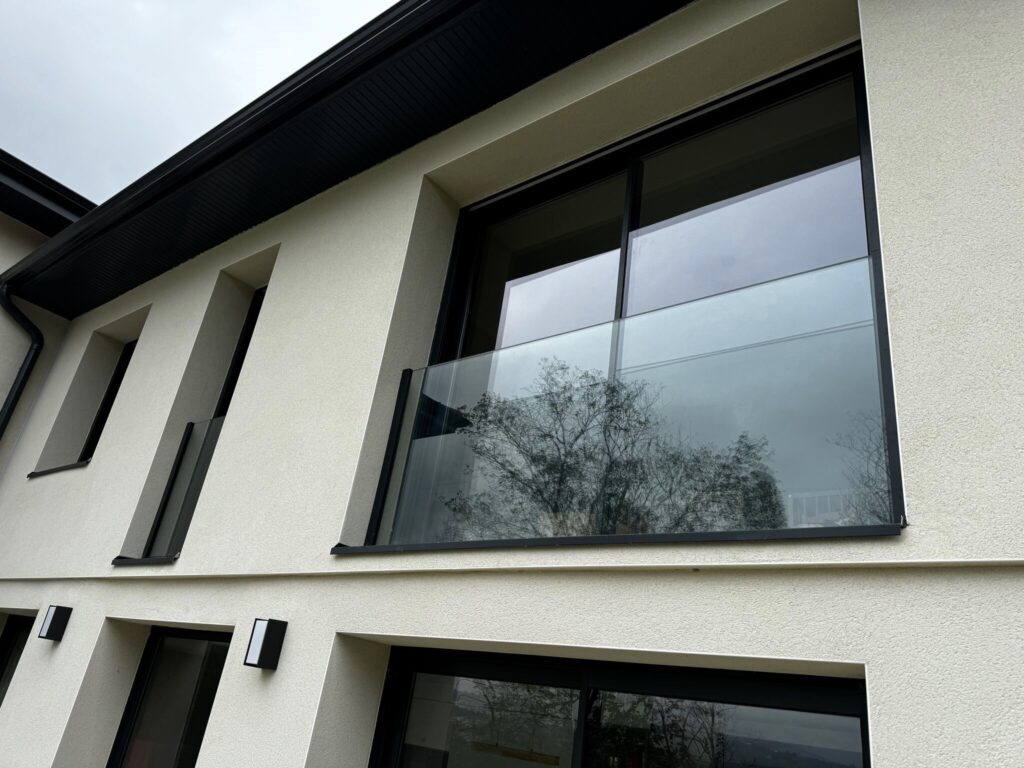
The result is a space that opens inward like a miniature terrace, but with no platform beneath you. A Juliet balcony allows fresh air and natural light to flood inside, giving the feeling of outdoor space where there is none. They are especially popular in properties without room for an external balcony, such as apartments or homes on narrow plots, because they offer a stylish way to maximise ventilation, views and daylight without requiring significant structural changes. Although practical in nature, Juliet balconies have a romantic presence, largely influenced by their name.
Where did Juliet Balcony originate from?
The association with romance brings us to the origins of the term. The name Juliet balcony is widely credited to Shakespeare’s Romeo and Juliet, one of the most famous love stories in the world. In Act 2, Scene 2, Juliet is famously depicted standing above Romeo, speaking to him from a raised opening. This iconic moment has become known as The Balcony Scene, even though Shakespeare never actually described a balcony, nor did the original stage instructions mention one.

Early theatres often used simple platforms or upper levels to suggest different locations, so Juliet’s elevated position became strongly linked with balcony imagery in subsequent performances. Over the centuries, theatrical interpretations embraced the idea of Juliet leaning over a balustraded opening.
The visual was memorable, romantic and eventually seeped into architecture and everyday language. As homeowners, builders and designers looked for a term to describe a balustrade outside full-height windows, the link to the fictional Juliet felt irresistible. And so, this elegant barrier became known as a Juliet balcony, even though Shakespeare never intended it.
Juliet OR Juliette?
Now that we know why the name exists, we can investigate why the spelling varies. The spelling Juliet mirrors the name of Shakespeare’s character as it appears in the play. However, the spelling Juliette incorporates an extra t and an e, adopting a French version of the name. This raises the question: if Shakespeare’s character was named Juliet, why do so many companies and customers use the longer French spelling? There are a couple of reasons, and neither is particularly dramatic. Firstly, much of British architectural language borrows from French, including familiar words like façade, niche, bay and balustrade itself.
Adding the extra letters in Juliette visually aligns the term with European architectural terminology and evokes continental elegance. Some designers and manufacturers prefer it for stylistic reasons, believing it looks more refined when written down.
Secondly, French architecture has played a significant influence on British home design, particularly in periods where classical and ornate features were fashionable. The Juliette spelling simply appears more French, and the association with romantic European aesthetics makes it appealing when marketing a decorative object.
As a result, both spellings have become commonplace, even though one is technically more historically accurate. Another factor is that British English embraces multiple accepted spellings for many imported terms. Consider words like décor/decor, façade/facade or even moulding or molding depending on preference. Because the term is not governed by strict architectural law, both Juliet and Juliette have evolved into acceptable alternatives.
So, which one is correct? The short answer is that Juliet balcony is the correct spelling in relation to Shakespeare and the naming tradition derived from his play. If we are naming a balcony after Juliet herself, then logically the spelling should match the name in English.
It is technically accurate, historically faithful and the spelling most widely recognised in British English. However, the longer Juliette spelling is not wrong. It is simply an adopted variation that has become accepted through usage. Some customers find it more attractive on paper and some manufacturers prefer it for graphic or branding reasons.
There is no official regulatory guidance stating that one spelling must be used, and building regulations in the UK refer to protective balustrades or guarding rather than naming Juliet balconies directly. In practice, both terms refer to exactly the same thing, and the spelling choice has no impact on the product you receive or the safety standards it must meet.
Functional Juliet Balconies
While the spelling may be a talking point, the real importance of a Juliet balcony lies in its function. These balconies provide essential guarding for upper-floor openings, keeping occupants safe while allowing rooms to open freely. Modern versions often feature sleek glass panels supported by aluminium or stainless steel posts, clamps or frames, making them ideal for contemporary homes and commercial developments.
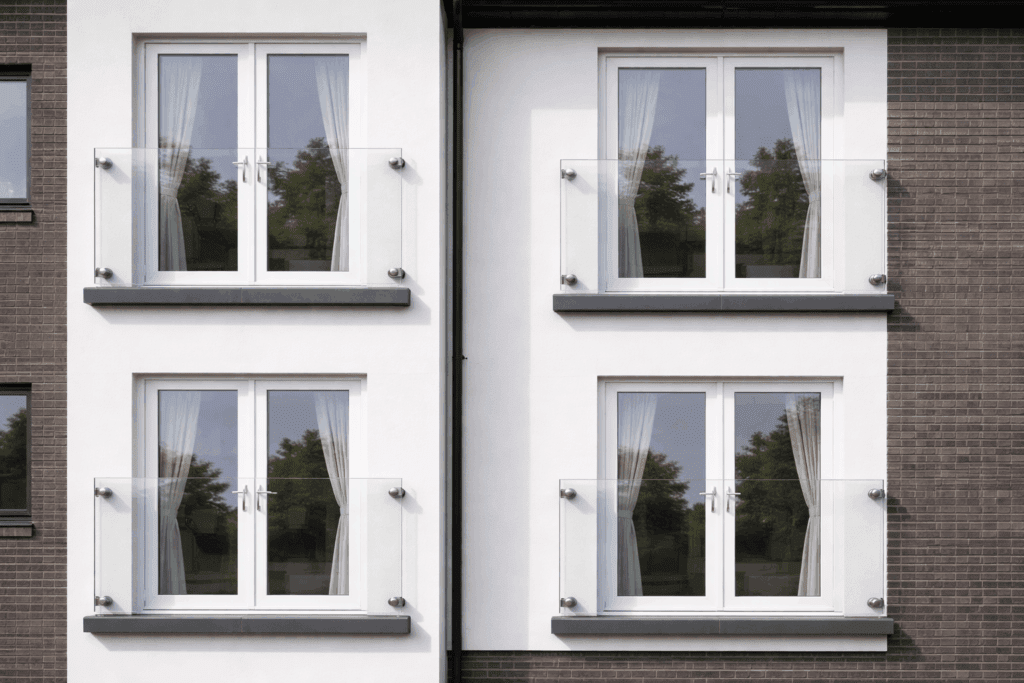
Glass Juliet balconies are particularly popular because they maximise light and offer uninterrupted views. They add an airy, spacious feel to a property without altering the footprint of the building. Whether you spell it Juliet or Juliette, this type of balcony has become a smart solution for modern living, bringing the outdoors in without the need for an actual outdoor structure.
As suppliers of balustrade solutions, we have seen a growing appreciation for these stylish installations. Customers often come to us with specific aesthetic preferences, whether they want a minimalist frameless glass design or a more traditional metal look. Understanding the name helps homeowners feel confident in what they are buying, and we enjoy being able to share not just the practical benefits but also the history behind the terminology.
We take pride in providing high-quality Juliet balcony systems that comply with British safety standards while enhancing the appearance of a property. Knowing that a balcony named after a Shakespearean heroine has become a contemporary architectural staple only adds charm to the process.
The debate between Juliet and Juliette is ultimately one of language rather than substance. One spelling is historically accurate, tied directly to Shakespeare’s Juliet, while the other brings a French-influenced elegance to the term. Both have become acceptable in everyday use, and both describe the same architectural feature: a protective barrier fitted outside a large upper-storey opening, providing style, safety and a sense of openness without the need for a projecting platform.
At Balustrade Superstore, we fully understand why both versions continue to exist. Whichever spelling you prefer, we are here to help you choose the perfect balcony solution for your home, combining practicality, beauty and a touch of romantic history inspired by one of the most famous scenes ever written.
